
Branches working in silos
Every showroom kept its own record in its own way. There was no single place where the whole business came together, so nobody could compare one branch against another without asking for it.
How West African Decor took a tile, sanitary and lighting business off paper, spreadsheets and a desk-bound system — and onto Nexstock, where stock, documents and every branch’s numbers are live, in one place, from anywhere.

West African Decor sells the things that finish a building — porcelain and marble-look tiles, WCs and basins, mixers and lighting. Stock arrives by the container, lands in central warehousing, and is pushed out to the showrooms where customers buy. Buyers pay upfront, then collect: sometimes there and then, often days later, frequently in more than one trip.
That is a document business as much as a stock business. Every order becomes a quote, an invoice, a release note and a record of what has actually left the building — across ten showrooms and a warehouse that supplies them all. Getting that right on paper, in a spreadsheet, or on a system chained to one desk is where the business kept losing its grip.
The business ran, and ran well — but nothing was joined up. The owner could not see it, and the stock numbers could not be trusted by the people selling from them.
Every showroom kept its own record in its own way. There was no single place where the whole business came together, so nobody could compare one branch against another without asking for it.
Knowing what a showroom had sold today meant phoning and waiting. The real numbers and the reports worth acting on arrived long after the moment to act on them had passed.
A customer would be told an item was in stock and travel to collect it — only for it not to be there. The figure on the record and the goods on the floor had quietly drifted apart.
Goods sold, goods received, goods moved in from the warehouse or another branch — each should move the count the moment it happens. None of it did, so the drift never stopped growing.
Some branches worked on paper, some on spreadsheets, the more advanced ones on desktop software — which only worked while you were sitting in front of it, in that building, on that machine.
Stock left one location on a phone call and a delivery note. Nothing reconciled what was sent against what arrived, and neither side’s figures moved to reflect it.
Rather than switch ten branches overnight, we ran a pilot at the flagship showroom and the central warehouse — the pair with the most traffic and the most stock movement between them. Everything below was proven there first, then taken out to the rest of the network.
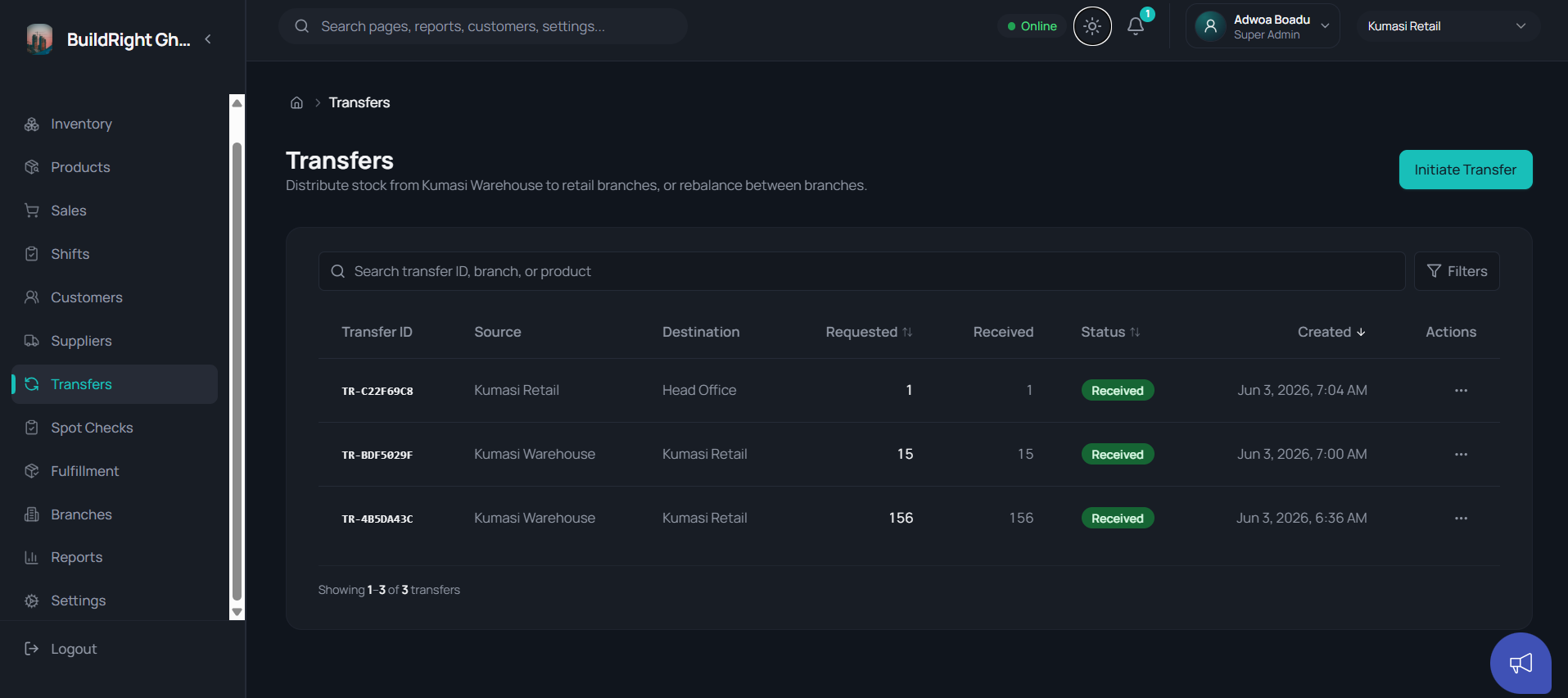
Every location reads from one catalogue of 750+ products. A sale takes stock down, a transfer in puts it up, goods arriving add to it — as it happens, not when someone gets round to updating a file. What a customer is told is what is really on the floor.
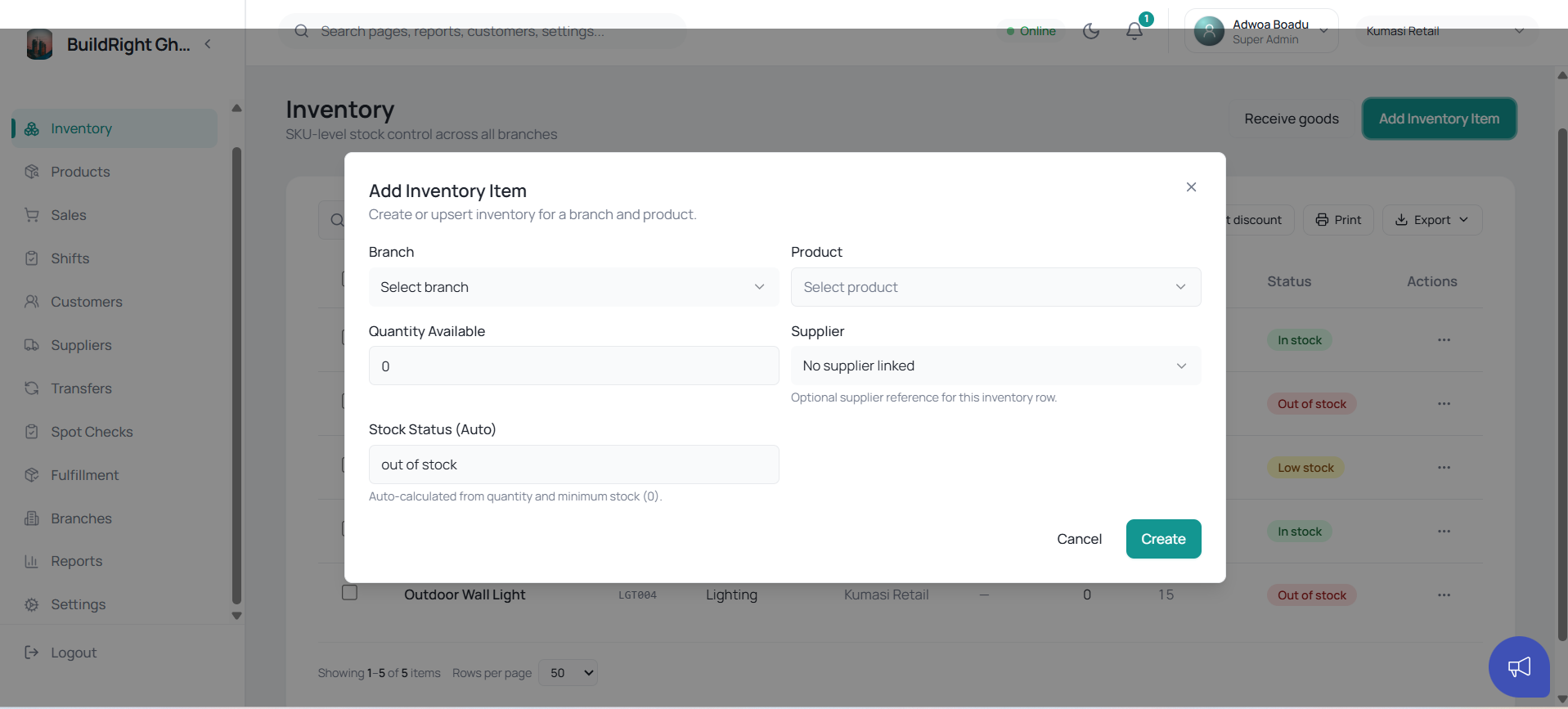
A customer picks their materials and leaves with a proforma quote. When they commit, it becomes an invoice — no re-typing, no second version of the truth. Payment is settled upfront by cash, mobile money, card, bank transfer or cheque, and the money is tied to the person who took it.
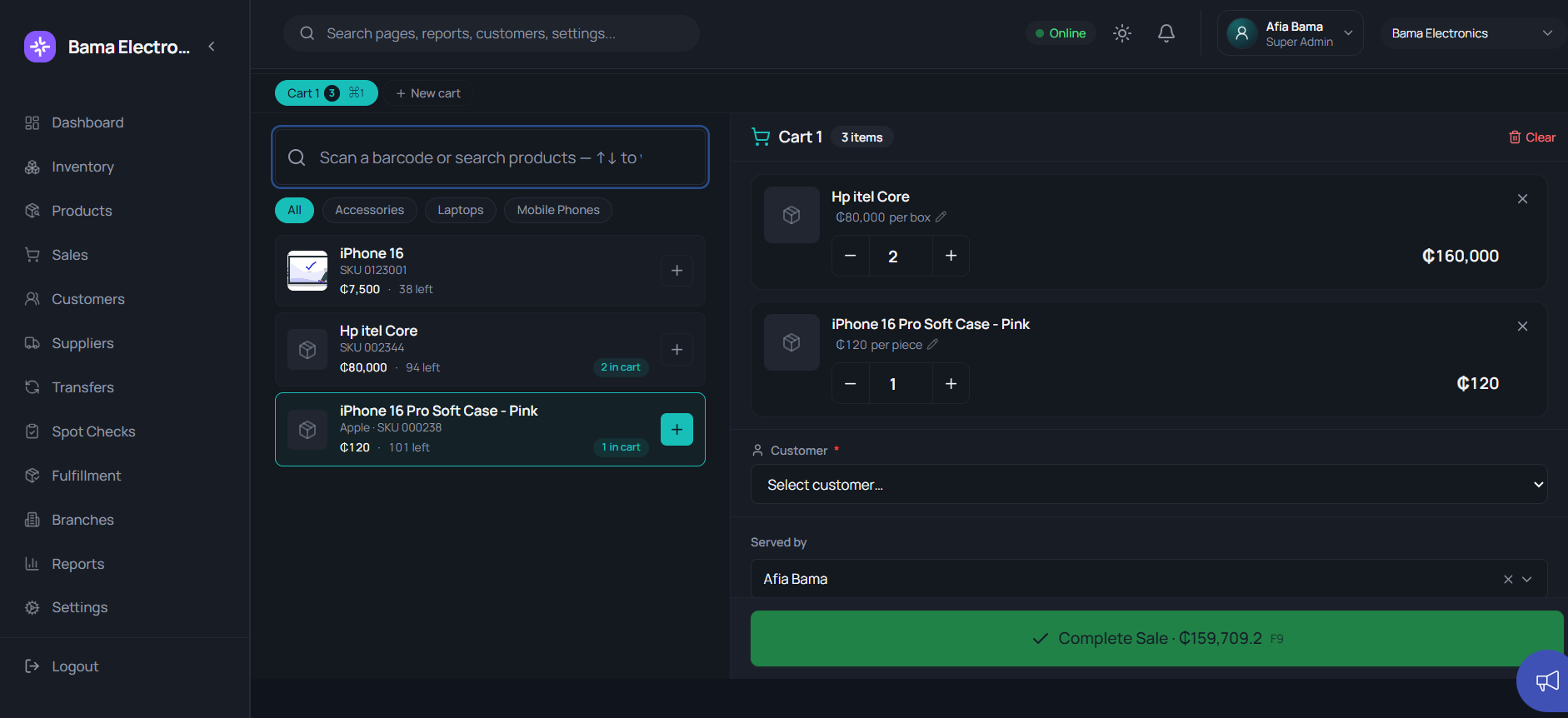
Customers rarely take everything at once. An invoice can be paid in full and then drawn down over several visits, with a waybill raised each time goods leave the building. Nothing goes out undocumented, and anyone can see what a customer is still owed.
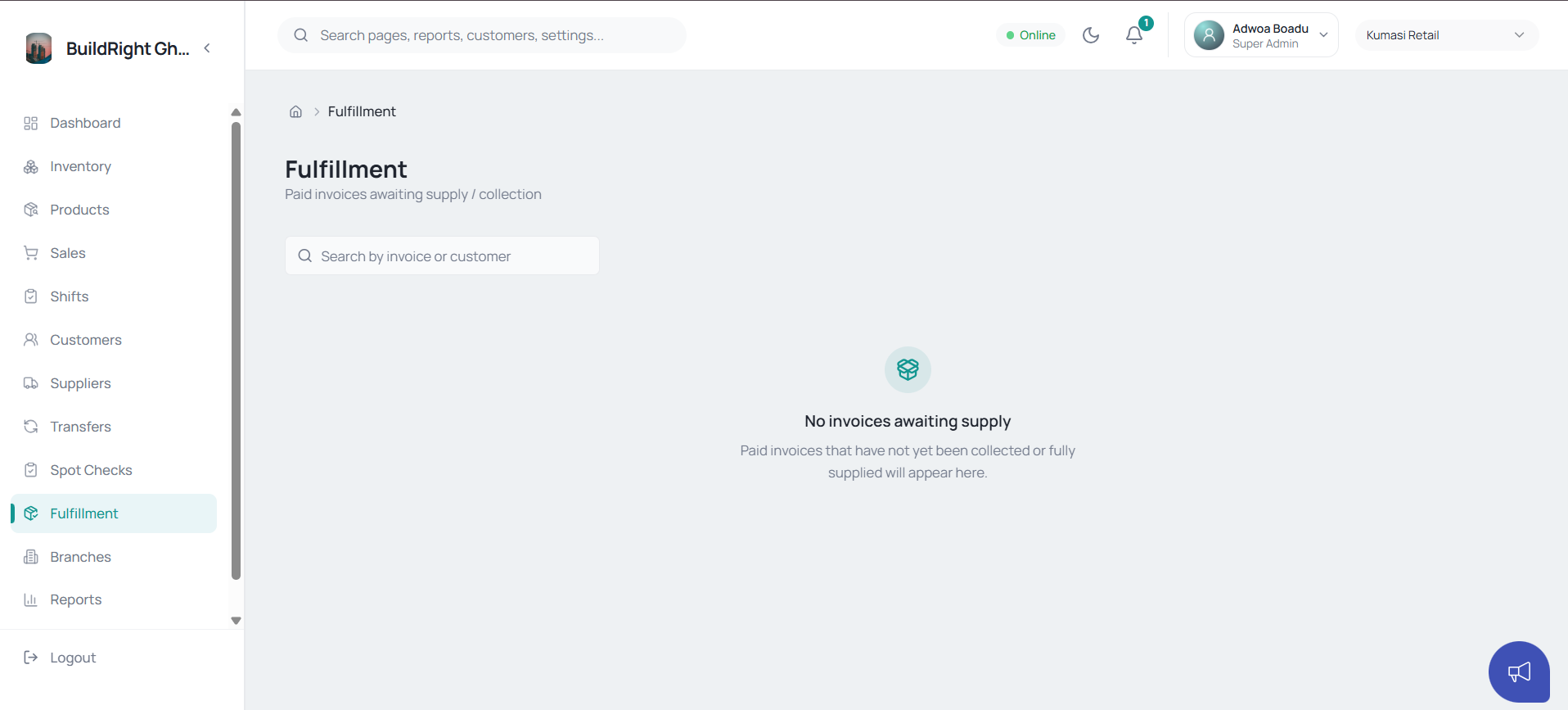
Moving stock is now a tracked handover rather than a phone call: requested, approved, dispatched, received. The sending location’s count goes down and the receiving one’s goes up on confirmation — so the two ends can no longer disagree about what was sent.
The owner has a private workspace, separate from the staff app: today’s trading across every branch, what each location is holding, what has sold and what has been collected. It opens on a phone in a car park as readily as on a desk — the thing the old desktop system could never do.
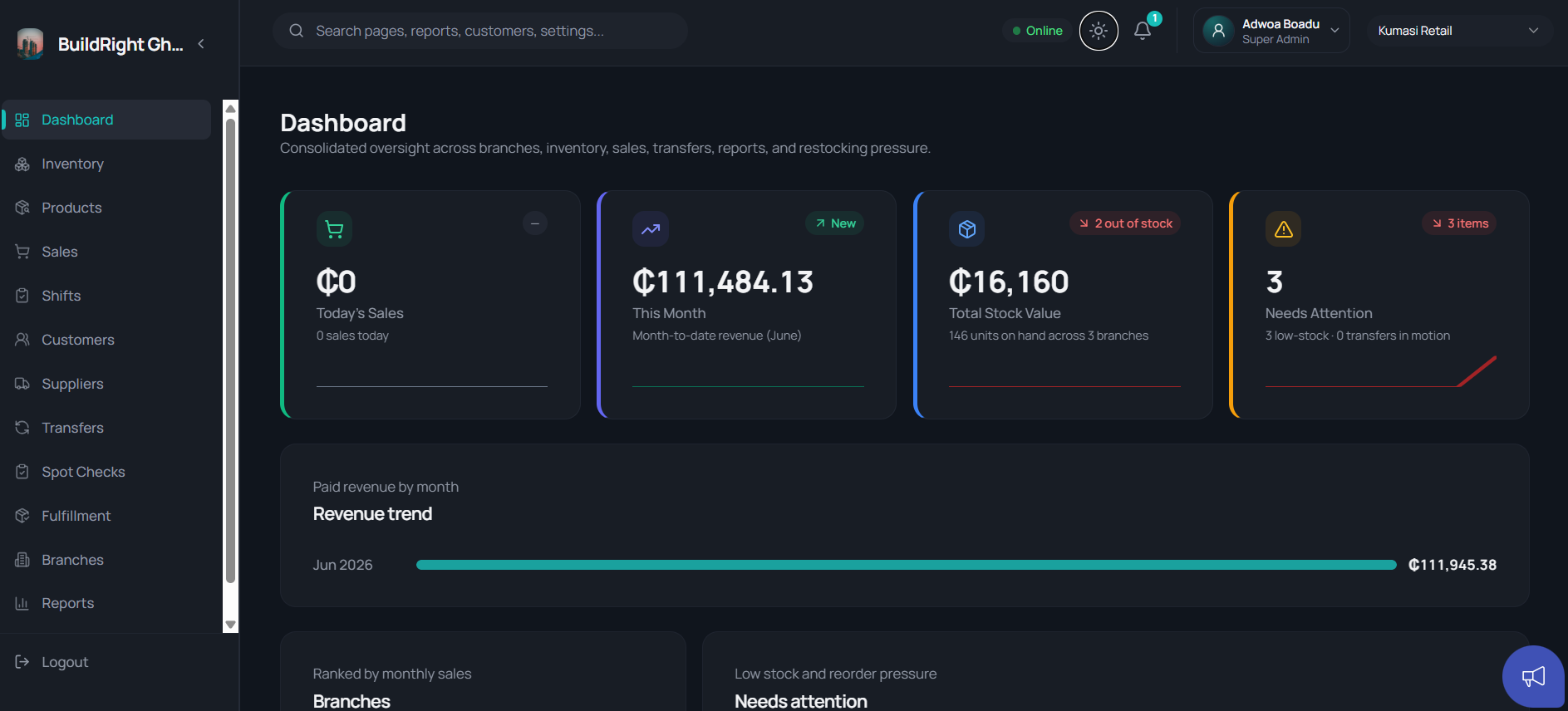
The pilot ran where the pressure was highest — the flagship showroom and the central warehouse that supplies it. Once the numbers held and the staff had stopped reaching for paper, the rest of the network followed.
The owner opens one screen and sees every showroom — what has sold, what is held, what is moving — instead of ringing managers and waiting for the answer.
Because every sale, transfer and delivery moves the count as it happens, what a customer is told over the counter is what is waiting when they arrive.
Quote, invoice, payment and each waybill as goods go out — one connected record, so what a customer has paid for and what they have collected never fall out of step.
The business is no longer tied to one machine in one building. Managers, warehouse staff and the owner each work from the same live records, from wherever they are, seeing only what their role allows.
Every branch used to be its own little island, and I only found out what happened weeks later. Now I open one screen and the whole business is there — and when we tell a customer something is in stock, it is.
OwnerWest African DecorRun your branches like West African Decor
Live stock, invoicing, waybills, transfers and an owner’s view of everything — one system for every branch. Start free on a single branch.
About this story: West African Decor runs its business on Nexstock across ten retail showrooms and central warehousing. Volumes quoted for the pilot phase are taken from their live account; branch names, locations and financial figures are withheld at the customer’s preference. The quotation reflects the owner’s perspective.